What is ‘Stealthing?’ Is It Illegal?
You may have heard of it in passing or thought it was something else entirely. Sadly, it may have happened to you, and you didn’t know it was something cruel. Have you heard of “stealthing" in any conversation? Well, if you only know the basics, or even just heard it once in conversation, we’re here to help you break it down. To put it simply, "stealthing" is a serious issue. “Stealthing” is a form of sexual assault. We know, it's an intense sentence to read, but it's one to talk about. And as we said, chances are, many may not know that what happened to them is considered assault.
"Stealthing" is when two people agree to have sex, but one person either lies about putting a condom on or removes it without the other's consent. And for those wondering, "stealthing" is actually a slang word for "non-consensual condom removal," and it originated in the LGBTQIA+ community. It's been used in the community to describe the act of criminally transmitting HIV (also less famously referred to as "generationing" and "gift giving" according to Hugh Klein at the Kensington Research Institute).
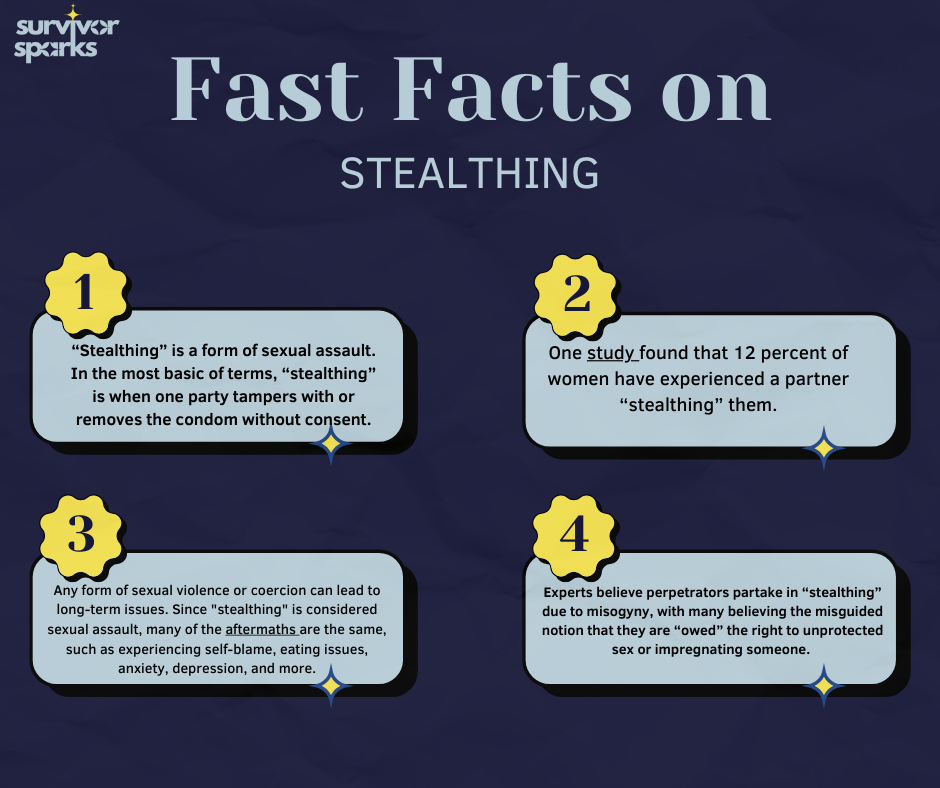
In the most basic of terms, “stealthing” is when one party tampers with or removes the condom without consent.
First things first, you’re probably wondering how much of an issue it is, specifically how common it is for women. One study found that 12 percent of women have experienced a partner “stealthing” them. But like rape itself, “stealthing” is incredibly underreported. Speaking of rape, many are aware that rapists do the horrible act as a form of power (not attraction as so many incorrectly claim). The same can apply to “stealthing,” but experts like Mikaela Shapiro of the Touro Law Center also claim that many perpetrators partake due to misogyny, with many perpetrators believing they are “owed” the right to unprotected sex or impregnating someone. No one has the right to someone else’s body, plain and simple.
But here’s more you need to know about “stealthing” below!
Is “Stealthing” Illegal?
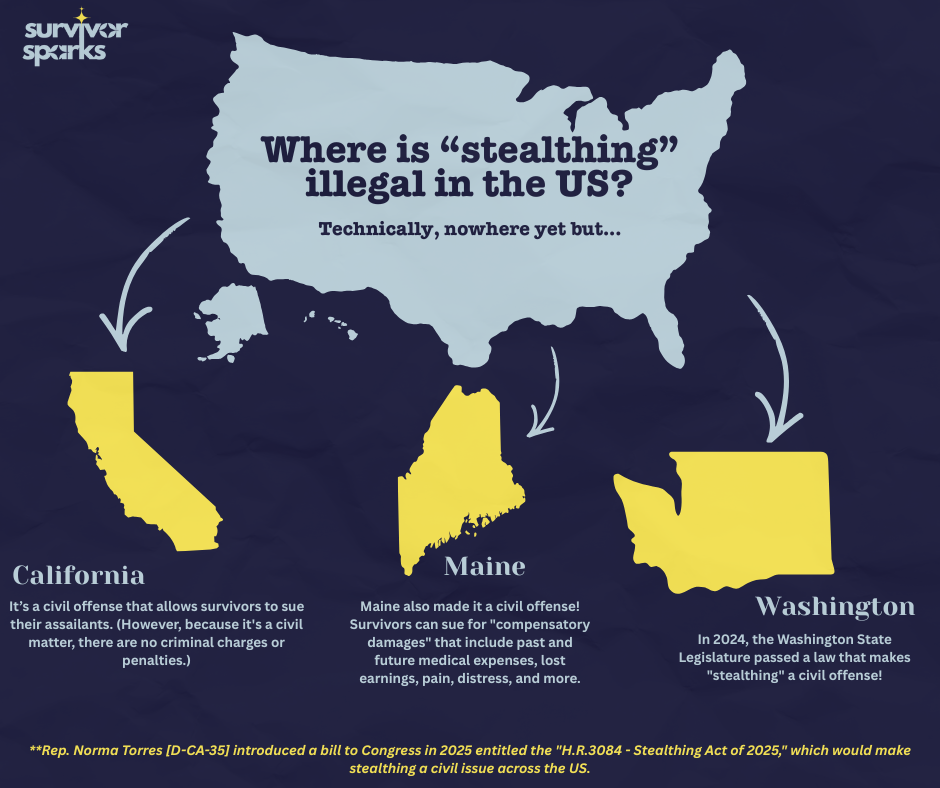
Unfortunately, it’s quite complicated in the United States. (What isn’t at this point?) While “stealthing” is commonly referred to as a type of rape and reproductive coercion, it's still not a crime in the US (for the most part). However, there are three states that have made some moves to make it punishable by law:
CALIFORNIA
Back in Sept 2021, the California State Legislature passed a bill sponsored by Assembly member Cristina Garcia that would make the act be considered "sexual battery." However, Governor Gavin Newsom signed a bill that made it a civil offense instead, meaning survivors can sue their assailants. For evidence, survivors can use STI tests, pregnancy tests, text messages, and third-party conversations. However, since it's a civil issue, there are no criminal charges or penalties for it.
MAINE
Maine passed a similar bill in 2023 that made “stealthing” a civil cause of action. According to the Maine Legislature, survivors can sue for "compensatory damages" that include past and future medical expenses, lost earnings, pain, distress, and more.
WASHINGTON
In 2024, the Washington State Legislature passed a law that makes "stealthing" a civil offense, like Maine and California.
Can It Be Made Illegal All Over the US?
Rep. Norma Torres [D-CA-35] introduced a bill to Congress earlier this year entitled the "H.R.3084 - Stealthing Act of 2025," which would make stealthing a civil issue across the US.
Is the Aftermath Similar to Rape?
Any form of sexual violence or coercion can lead to long-term issues. Since "stealthing" is considered sexual assault, many of the aftermaths are the same, such as experiencing self-blame, eating issues, anxiety, depression, and more.
Keep in mind that every survivor is different, and that you are not alone.